
E-Mini vs. Micro Futures: Which to Start With
A Creation Station Studios guide for actors, YouTubers & influencers
The single most common way beginners fail a prop firm evaluation isn’t a bad strategy — it’s trading a contract that’s too big for the account size and their experience. Here’s the difference between E-mini and Micro futures, and why almost everyone should start smaller than they want to.
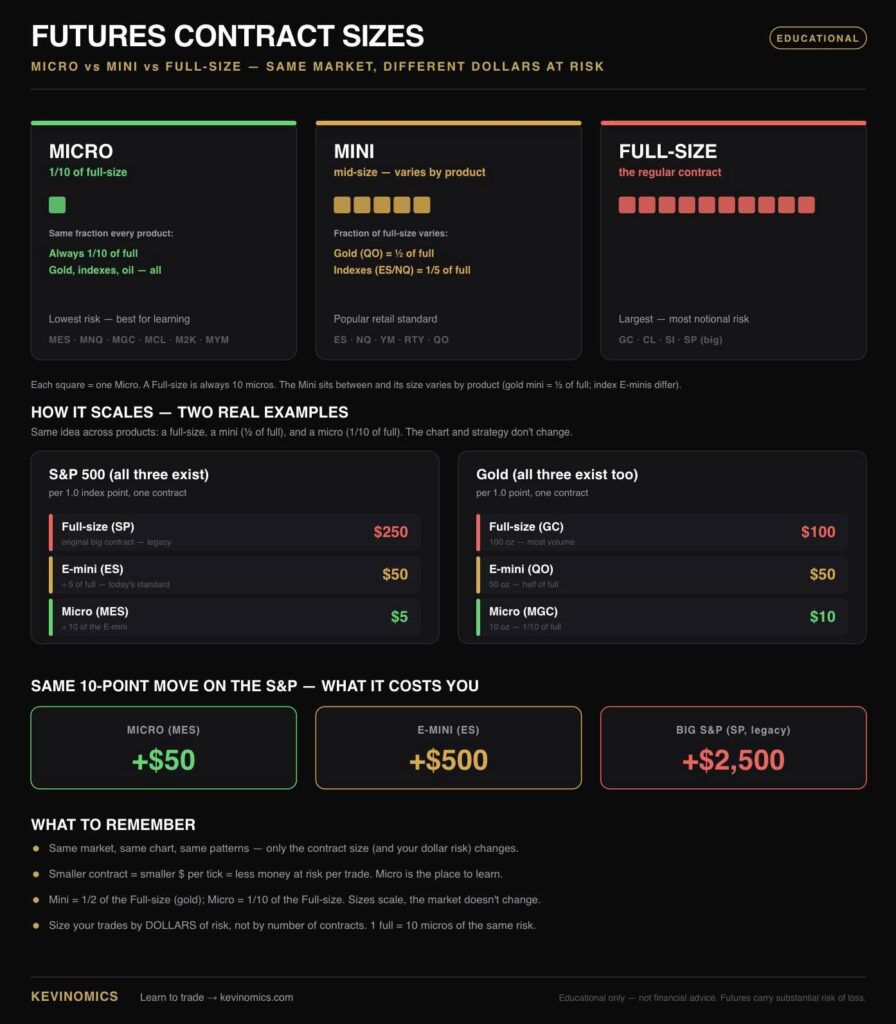
What “E-Mini” and “Micro” Actually Mean
Both are futures contracts tracking the same underlying index — the E-mini S&P 500 (ES) and its Micro counterpart (MES) both track the S&P 500. The difference is size: one Micro contract is exactly 1/10th the size of one E-mini contract. Same market, same price action, one-tenth the dollar risk per point of movement.
The Comparison
| E-Mini | Micro | |
|---|---|---|
| Contract size | $50 x index (e.g. ES) | $5 x index (e.g. MES) — 1/10th |
| Dollar move per point | Larger swings, larger P&L | Smaller swings, smaller P&L |
| Best for | Funded accounts, established size | Learning execution, first evaluations |
| Drawdown risk | Hits daily loss limits faster | Easier to stay inside drawdown rules |
Why Micros Exist
Micro futures were introduced specifically so newer traders could learn execution — order entry, stop placement, position management — without a single bad trade wiping out a meaningful chunk of a funded account. A losing trade on a Micro costs a fraction of the same mistake on an E-mini.
Sizing for a Funded Evaluation
On a $50K evaluation with a $1,000 daily loss limit, a handful of E-mini contracts moving against you can end the evaluation in minutes. The same setup traded in Micros gives you far more room to be wrong, adjust, and still stay inside the rules — which matters more than how fast you hit the profit target.
When to Scale Up
Move from Micros to E-minis (or add more contracts) only after a track record of consistent, rules-following trades — not after one good week. The evaluation rewards traders who look boring on paper. Scaling too early is how a good month turns into a blown account.