
Self tape audition recording

Self Tape Audition Recording

Self tape audition recording is part acting, part production. For years our studio handled the production side for thousands of actors: light, sound, framing, a reader and fast delivery. Here is how a professional recording is put together, and how to do it yourself.
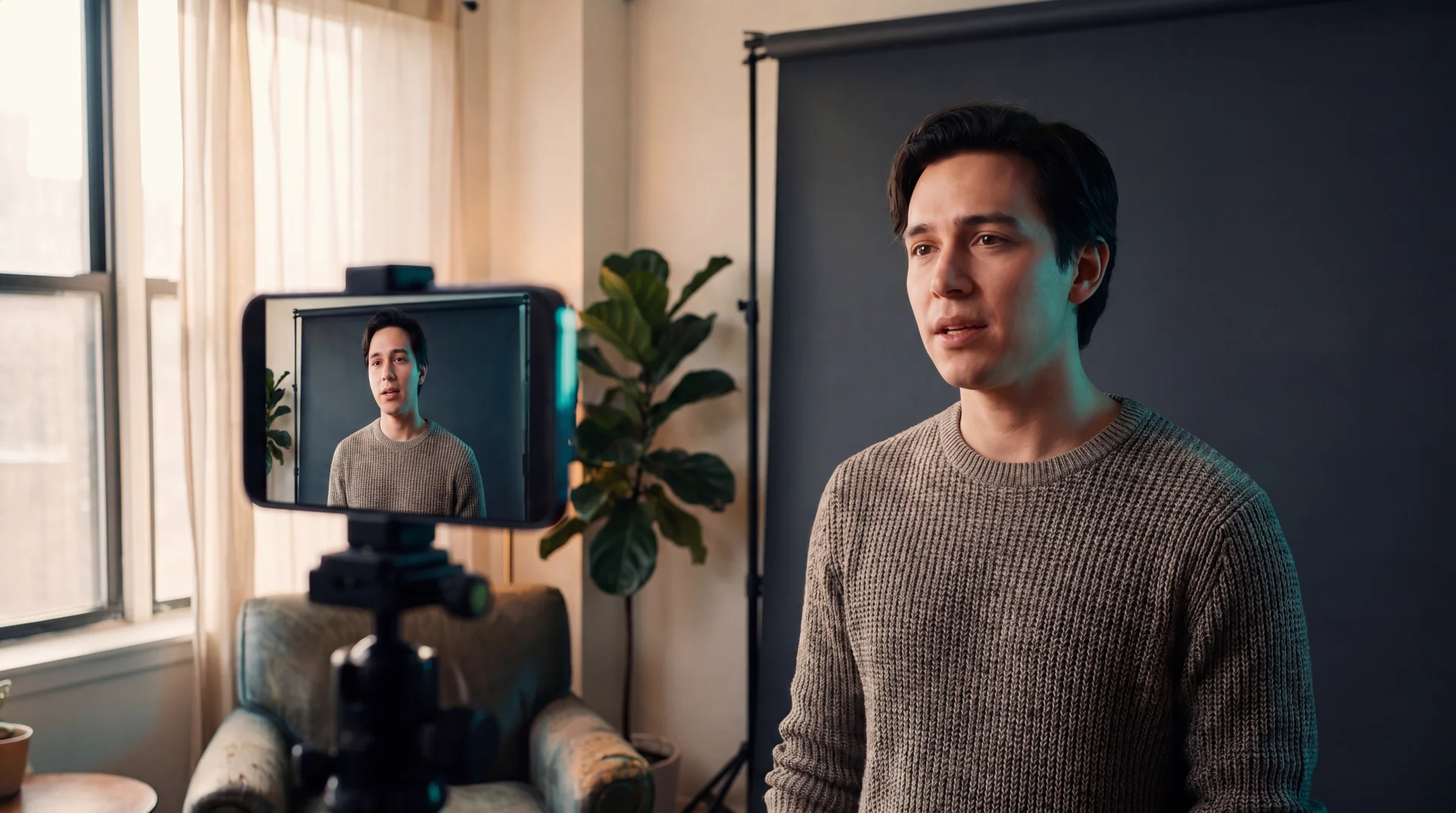
Self tape audition recording studio with professional lighting

Why Self Tape Audition Quality Matters

Casting directors, agents, managers and producers all watch self tapes. Poor video or sound can distract from your performance, and it reflects on you and your representatives.

A clean self tape audition recording does the opposite: it disappears, so casting only sees your choices. Union actors can also check member news and guidance from SAG-AFTRA.

What a Professional Recording Includes

  • A steady camera at eye level, framed from mid-chest up.
  • Soft, even light on your face and a plain backdrop.
  • Clean sound recorded close to you, with no echo.
  • A reader beside the lens who reads clearly and a little quieter than you.
  • A simple edit, the right file name and on-time delivery.

Every one of these can be done at home with a phone. Course 2, How to Set Up a Self-Tape, walks through each step.

Self Tape Audition Recording at Home

Pick one spot with a plain wall, face a window or one soft light, and record in the quietest room you have. Do a ten-minute test shoot before your first real audition, and keep the setup in place for short-notice callbacks.

If you need a reader, book a virtual reader. For notes on your performance, see coaching and consultation.

Self tape audition recording at home with a phone

Rather Self-Tape at Home? Learn How.

The Self-Tape Academy teaches you to set up and record a professional self-tape yourself: three courses, a learning dashboard, quizzes and certificates, all for one payment of $199.